

Here we go again. A federal officer tries to do his job, someone gets shot, and instead of waiting for facts, the usual political script fires up immediately. ICE is evil. Law enforcement is out of control. The system is broken. We have heard this movie before, and the ending is never good for the people actually wearing the badge. The shooting of Julio Cesar Sosa‑Celis in Minneapolis is still under investigation, with sharply different accounts from federal officials and family members. That should normally mean patience. Instead, it became another excuse to pour gasoline on an already tense situation.
Democratic rhetoric about ICE over the last several years has followed a simple pattern. Label the agency as illegitimate, call enforcement immoral, and imply officers are acting with bad intent by default. The theory seems to be that if you say it loud enough, enforcement will just stop. What actually happens is more predictable. Officers are treated as enemies. Crowds interfere with arrests. Resistance escalates. Split‑second decisions get even harder. Shockingly, this increases the chance that someone gets hurt.
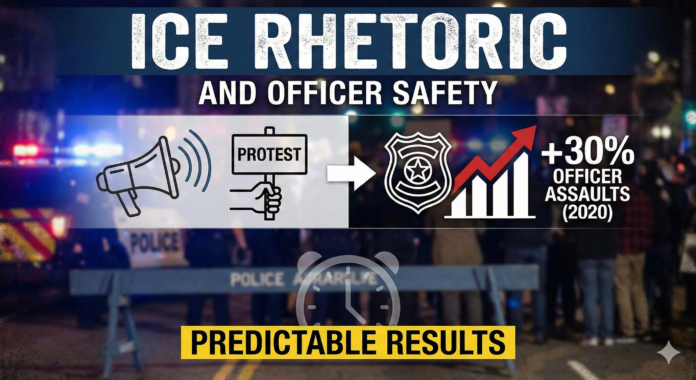
We saw this exact cycle in 2020. After months of nonstop political attacks on policing, assaults on officers spiked nationwide. The FBI reported a more than 30 percent increase in officer assaults that year, with ambush‑style attacks becoming more common. Line officers did not suddenly change. The environment did. When leaders signal that law enforcement is the problem, some people hear that as permission to resist, obstruct, or attack.
Now apply that lesson to immigration enforcement. ICE officers are told to arrest dangerous individuals, often with limited local cooperation and in hostile neighborhoods. At the same time, politicians describe ICE as racist, abusive, or criminal. Then everyone acts shocked when arrests turn chaotic. If people believe officers have no authority or moral standing, they are more likely to interfere. That puts suspects, bystanders, families, and officers at greater risk.
None of this means officers are always right or that mistakes never happen. It means reality does not care about slogans. Arrests are inherently dangerous. Undermining enforcement does not make them safer. It makes them messier. If political leaders actually cared about reducing violence, they would stop using law enforcement as a talking point and let investigations play out before lighting the match. Until then, we will keep replaying 2020, just with different uniforms and the same predictable results.